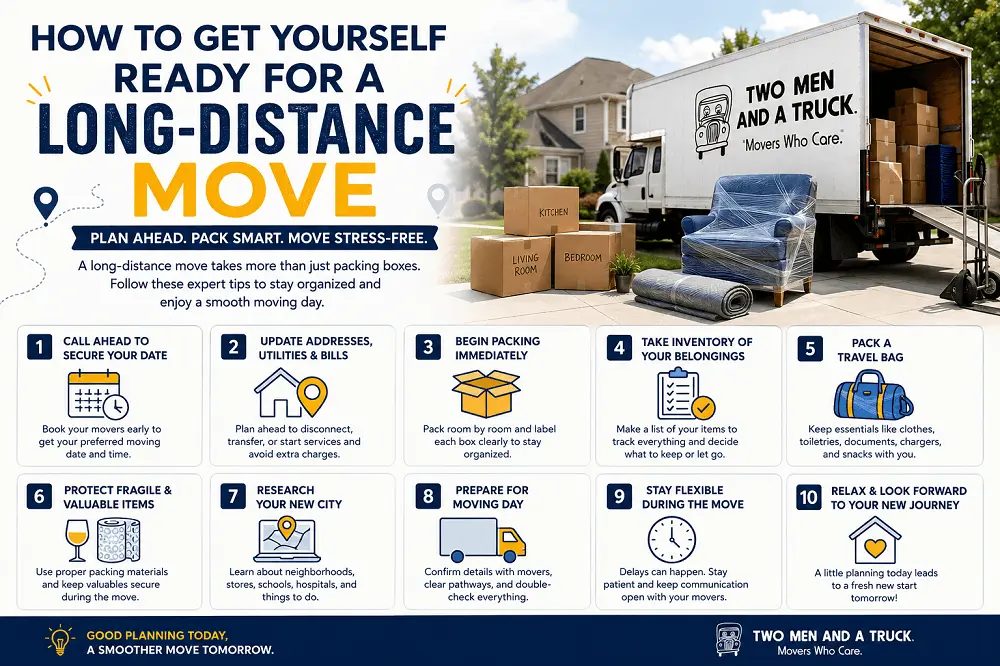
A long-distance move is not just about shifting boxes from one place to another — it is a major life event that involves months of planning, coordination, and decision-making. Whether you are relocating from Ludhiana to Bangalore, moving from Delhi to Mumbai, or shifting from Chandigarh to Bangalore, the challenges of an interstate move are very different from a local shift.
The good news is that with the right preparation, a long-distance move does not have to be stressful. Most moving problems — damaged items, missed deliveries, forgotten utilities, and last-minute chaos — happen because people do not plan early enough. This guide walks you through exactly what to do before, during, and after your long-distance relocation so that everything goes as smoothly as possible.
1. Call Ahead to Secure Your Moving Date
The first and most important step when preparing for a long-distance move is booking your packers and movers well in advance. For interstate relocation, you should ideally contact moving companies at least 4 to 8 weeks before your planned moving date. If you are moving during peak seasons — such as summer school holidays, major festivals, or end of the month — booking even earlier is advisable.
Why does early booking matter so much? Because long-distance moves require more resources than local ones. The company needs to arrange a large truck, an experienced crew, interstate route planning, and in many cases, transit insurance documentation. If you call at the last minute, you may find that all reputable companies are fully booked, leaving you with fewer — and often less reliable — options.
Early booking also gives you a stronger position to negotiate pricing. Companies are more willing to offer better rates when they have time to plan the move on their end. If you are relocating within Punjab or planning a longer route like Mohali to Bangalore, securing your date early is one of the best things you can do to reduce moving day stress.
2. Update Your Address, Utilities and Bills Early
One of the most commonly overlooked parts of a long-distance move is updating your address and transferring your utility services. Many people leave this for after the move and end up paying bills for a home they no longer live in, or arriving at their new city without electricity or internet access.
Here is what you should update at least two weeks before your moving date:
- Electricity connection — contact your state electricity board to close your current connection and apply for a new one at your destination
- Water supply — inform your local municipal authority about the change in occupancy
- Internet and cable — request disconnection at your current address and pre-register for a new connection at your new home
- Bank accounts — update your mailing address with your bank to avoid missing statements or cards
- Aadhaar and PAN records — update your address details in government records
- Insurance policies — notify your health, vehicle, and home insurance providers
- Subscriptions and deliveries — update your delivery address for online shopping accounts, magazines, and any recurring deliveries
Sorting these things out early means you can focus on settling into your new home without worrying about missed bills or service disruptions.
3. Start Packing as Soon as Possible
Packing for a long-distance move takes far longer than most people expect. It is not unusual for a 2BHK home to take 10 to 15 hours of active packing time when done properly. If you try to do it all in the last two or three days before the move, you will end up rushing, packing things carelessly, and forgetting important items.
The best approach is to start packing 3 to 4 weeks before your moving date and work room by room. Begin with the rooms and items you use the least — guest rooms, storage areas, off-season clothes, books, and decorative items. As you get closer to moving day, pack the items you use more regularly.
A few packing tips that make a big difference:
- Use sturdy double-walled cardboard boxes for heavy items like books and kitchenware
- Fill boxes completely to prevent items from shifting during the long journey — use newspaper or bubble wrap to fill empty spaces
- Pack heavier items at the bottom of the box and lighter items on top
- Use coloured labels or markers to identify which room each box belongs to
- Keep a separate checklist of everything you have packed in each box, or write a brief description on the side of the box itself
Organized, well-labeled boxes not only make loading easier for the movers but also make unpacking at your new home much faster.
4. Declutter Before the Move
A long-distance move is the perfect opportunity to go through everything you own and make conscious decisions about what you actually need. Moving unnecessary items across hundreds of kilometres costs money — most long-distance movers charge based on volume or weight, so the less you carry, the lower your bill.
Go through every room and sort your belongings into three categories:
- Keep — items you use regularly and genuinely need
- Donate or sell — items in good condition that you no longer use
- Discard — broken, expired, or worn-out items that serve no purpose
Old clothes, outdated electronics, duplicate kitchen items, worn-out furniture, and books you have already read are all candidates for decluttering. You can sell usable items through online platforms or donate them to local NGOs and charity organisations before you leave.
Decluttering does more than reduce your moving cost — it also means you arrive at your new home with only the things you actually want, making unpacking and organising much more manageable. People moving from larger cities like New Delhi or Mumbai often find years of accumulated items they had completely forgotten about when they finally start packing.
5. Take Inventory of Your Belongings
Before anything gets loaded onto the truck, create a complete inventory of everything you are moving. This is especially important for long-distance moves because it is harder to track items across multiple days of transit compared to a short local shift.
Your inventory does not need to be elaborate. A simple numbered list with a brief description of each box or item is enough. For example: “Box 12 — Kitchen, pots and pans” or “Box 7 — Master bedroom, clothes.” Photograph the contents of important boxes before sealing them.
For valuable items — electronics, jewellery, artwork, and antiques — note their condition in writing and photograph them individually before the move. This documentation is essential if you need to make an insurance claim for damage or loss during transit. It also helps you confirm that everything has arrived safely when the truck is unloaded at your destination.
6. Pack an Essentials Travel Bag
During a long-distance move, your belongings may be in transit for one to several days depending on the distance. You will need access to certain items immediately — either during travel or on the first night in your new home before you have had a chance to unpack.
Pack a separate essentials travel bag that you keep with you personally — not in the moving truck. This bag should include:
- Two to three days of clothing for every family member
- All medications and a basic first aid kit
- Phone chargers and laptop chargers
- Toiletries — toothbrush, soap, and face wash at minimum
- Snacks and a water bottle for the journey
- Important documents — Aadhaar card, PAN card, passports, lease or property papers, school records, and medical records
- Some cash and your bank cards
- Children’s comfort items — a favourite toy or book
Having this bag ready means that even if your moving truck is delayed, you and your family have everything you need to stay comfortable for a few days without digging through packed boxes.
7. Protect Fragile and Valuable Items
Long-distance moves involve longer time in transit, more handling points, and potentially rough roads — all of which increase the risk of damage to fragile items. Taking extra care when packing breakables is essential.
For glass items, crockery, and decorative pieces, wrap each item individually in bubble wrap and place them in a box with adequate padding on all sides. Mark these boxes clearly as “FRAGILE” on the top and all four sides so movers handle them carefully.
For electronics like televisions, laptops, and home theatre systems, use the original packaging whenever possible. If you no longer have the original box, use a double-walled box with generous foam or bubble wrap padding. Never pack electronics in boxes that are too large — they need a snug fit to prevent movement during transit.
Jewellery, important documents, cash, and sentimental items should never go on the moving truck at all. Keep them with you personally at all times. The same applies to medicines and any items you would struggle to replace if lost.
8. Research Your New City Before Moving
One of the most effective ways to reduce the anxiety of long-distance relocation is to research your new city thoroughly before you arrive. The more familiar you are with your new neighbourhood before moving day, the more quickly you will feel at home.
Things worth researching in advance:
- Grocery stores and markets — know where the nearest supermarket and local market are
- Hospitals and pharmacies — identify the nearest good hospital and 24-hour pharmacy before you need them in an emergency
- Schools and colleges — if you have children, research admissions requirements and application deadlines well before moving
- Public transportation — understand how the metro, buses, or autos work in your new city
- Neighbourhood safety and facilities — read reviews and forums about your new locality
If you are moving to a major city like Bangalore, Hyderabad, Pune, or Chennai, there are plenty of expat and relocation communities online where you can ask questions from people who have already made the same move.
9. Prepare for Moving Day
The day before your move and on the morning of moving day itself, there are several things you should do to ensure everything goes smoothly:
- Confirm your booking with the moving company — call them the evening before to confirm the arrival time and address
- Clear pathways inside your home — remove obstacles from hallways, staircases, and doorways so movers can move large furniture without difficulty
- Do a final walkthrough of every room — check inside cupboards, under beds, in the loft, and behind doors to make sure nothing has been left behind
- Disconnect and prepare appliances — defrost your refrigerator at least 24 hours before moving and disconnect your washing machine properly
- Keep pets and children safe — moving day is busy and chaotic; arrange for someone to look after young children and pets so they are not in the way during loading
- Keep your essentials bag, keys, and documents accessible — do not pack them in the moving truck
Being organised on moving day means the loading process happens faster, which directly reduces the number of hours — and therefore the labour charges — you are billed for.
10. Stay Flexible During Long-Distance Relocation
No matter how well you plan, long-distance moves can encounter unexpected delays. Traffic issues, mechanical problems with the truck, route detours, or weather conditions can all push back delivery timelines. The key is to stay calm and maintain clear communication with your moving company throughout the transit period.
Ask your movers for a contact number you can reach during transit hours and confirm that they will provide updates if there are any significant delays. Most professional moving companies will keep you informed proactively, but it is always good to establish this expectation upfront.
When you finally arrive at your new home, do not try to unpack everything on day one. Focus first on the essentials — setting up beds, getting the kitchen functional, and making sure utilities are working. Give yourself permission to settle in gradually over the first week. A long-distance move is physically and emotionally tiring, and being patient with yourself and your family during the transition makes a real difference.
Whether you are moving on a route like Mumbai to Delhi, Bangalore to Chandigarh, or Gurgaon to Mumbai, flexibility and clear communication are what separate a stressful move from a smooth one.
Conclusion
A long-distance move is one of the bigger challenges you will face in life — but it is entirely manageable with the right approach. The single most important thing you can do is start early. Early booking, early packing, early decluttering, and early address updates all combine to remove the last-minute pressure that causes most moving problems.
Hire a verified, insured moving company, get everything in writing, pack your essentials bag personally, and document your belongings before they go on the truck. Research your new city so you arrive with a sense of familiarity rather than uncertainty. And on moving day, stay calm, stay organised, and trust the process.
If you are planning a long-distance move from any city across India, explore our city and route directory to find trusted packers and movers near you. We cover moves across Punjab, Haryana, Maharashtra, Karnataka, Uttar Pradesh, and every other state in India — so no matter where you are moving to or from, we can help you find the right movers for your journey.
Frequently Asked Questions
How early should I book movers for a long-distance move?
It is best to book movers at least 4 to 8 weeks in advance for a long-distance or interstate move. If you are moving during peak season — end of month, summer holidays, or around major festivals — booking 8 to 10 weeks ahead is even better to secure availability and pricing.
What should I keep in my travel bag during a move?
Your essentials travel bag should include 2 to 3 days of clothing, all medications, phone and laptop chargers, toiletries, snacks, water, and important documents like Aadhaar card, PAN card, property papers, and medical records. This bag should travel with you personally, not on the moving truck.
How can I reduce stress during a long-distance move?
Start planning early, make a checklist and work through it systematically, declutter before packing so you are only moving what you genuinely need, and hire a verified and insured moving company. Staying organised throughout the process is the single most effective way to reduce relocation stress.
Should I label moving boxes?
Absolutely. Label every box with the destination room and a brief description of the contents. For long-distance moves especially, labeling helps movers place boxes correctly at your new home and makes unpacking far quicker and easier. Mark fragile boxes clearly on all sides.